
The company
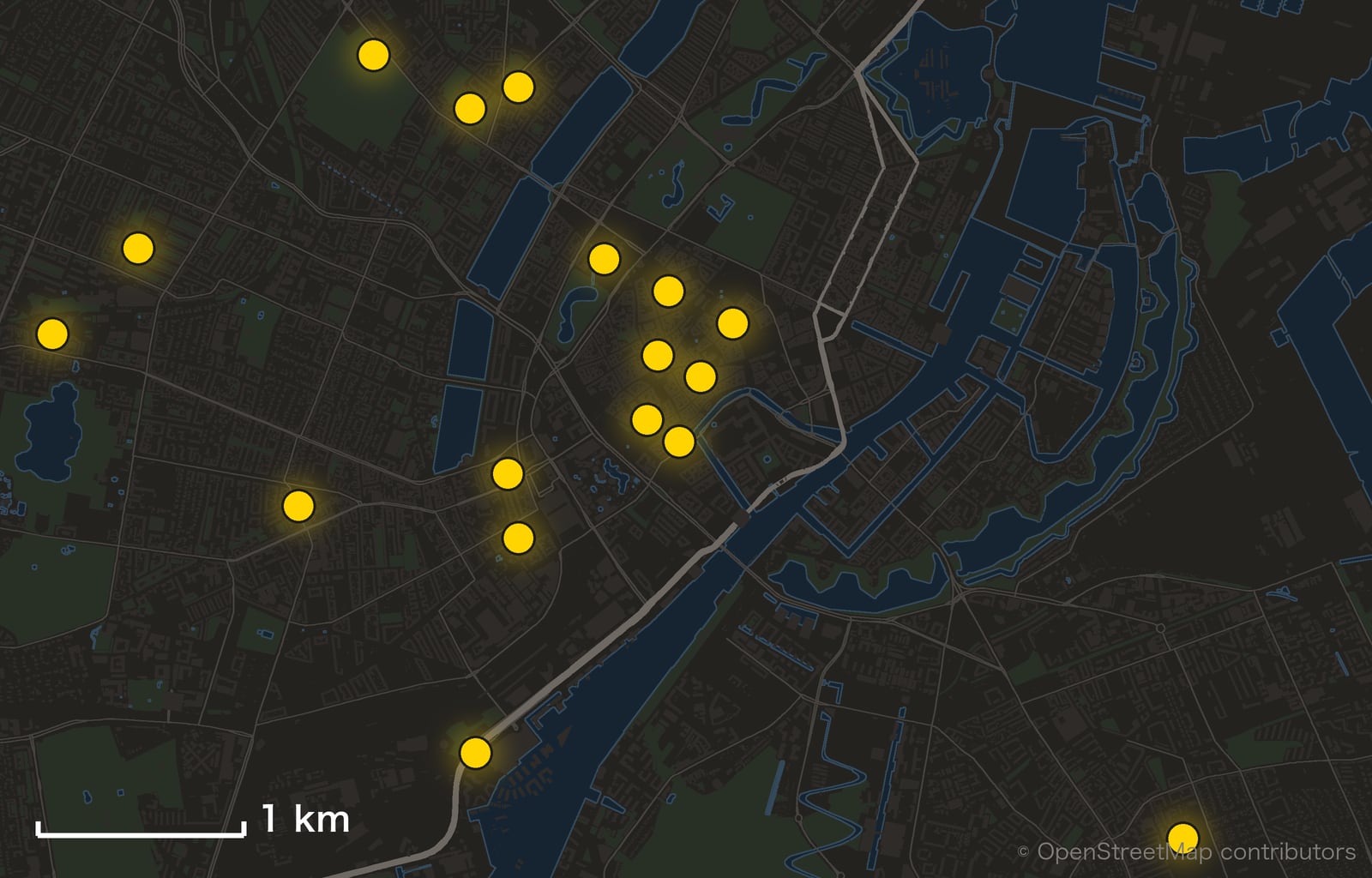
Du Bubble Tea is a company concept created for Aalborg University to research how culture shapes the design of a service. The brief was that of a real launch: a new bubble tea company opening its first two shops, in Copenhagen and in Beijing, with local staff and products, counting on a localised experience to build its brand, sales and customer engagement.
- WhereCopenhagen, Denmark · Beijing, China
- ProductBubble tea shops
The mission
Design one shop and copy it, and one city gets a service that feels foreign. Design two, and you end up with two companies. The work was to find what a single brand has to change, and what it has to keep, to feel at home in both cities:
How do you design a service experience for a bubble tea shop that caters to the preferences and cultural nuances of customers in both Copenhagen and Beijing?
The service
A bubble tea shop is a service as much as a drink: how people find it, order, pay, wait, and where they sit to drink it. In Beijing that service starts on the phone, before anyone reaches the counter. In Copenhagen it starts with someone deciding whether to try a drink they have never had.
So the design covered the whole service in each city: the brand, the menu, the shop and every step from ordering to the drink in hand.
My role
Six months in 2023, on my own, with fieldwork in Copenhagen and in Beijing. I led the project from the first desk research to the delivery: research in both cities, synthesis, personas and journeys, service blueprints, the concept and brand, and the reports that closed it. Neither culture was mine. As a French designer working for Danish and Chinese customers, the method had to account for my own assumptions as much as for the users’.
Research in two cities
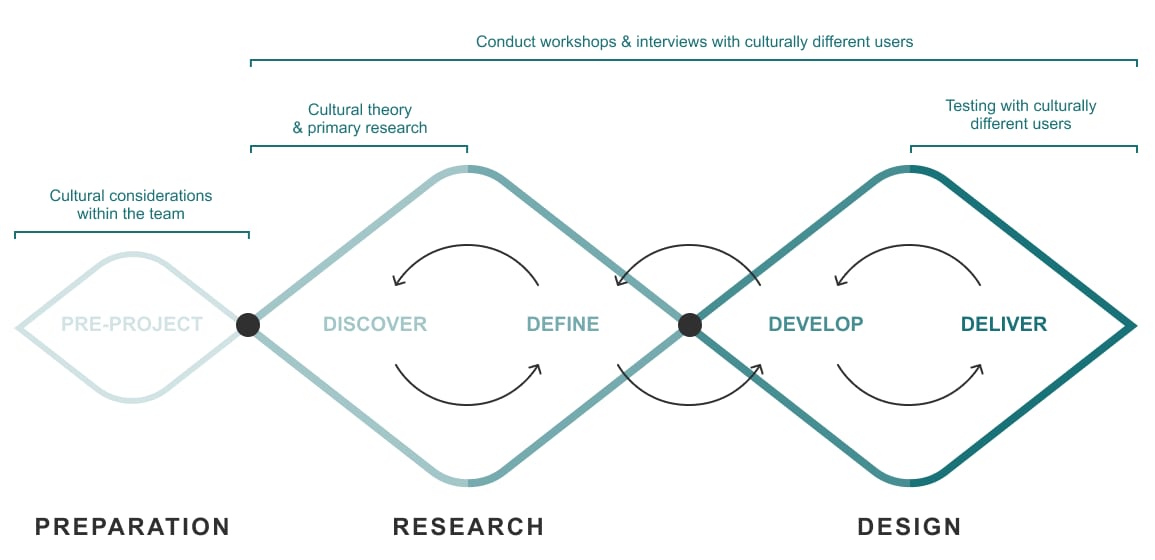
The plan. Most service design methods quietly assume that the designer and the user share a culture. Here, nobody did. So I adapted the double diamond: a pre-project phase in front for the cultural work inside the team itself, and a short reflection on culture closing each phase.
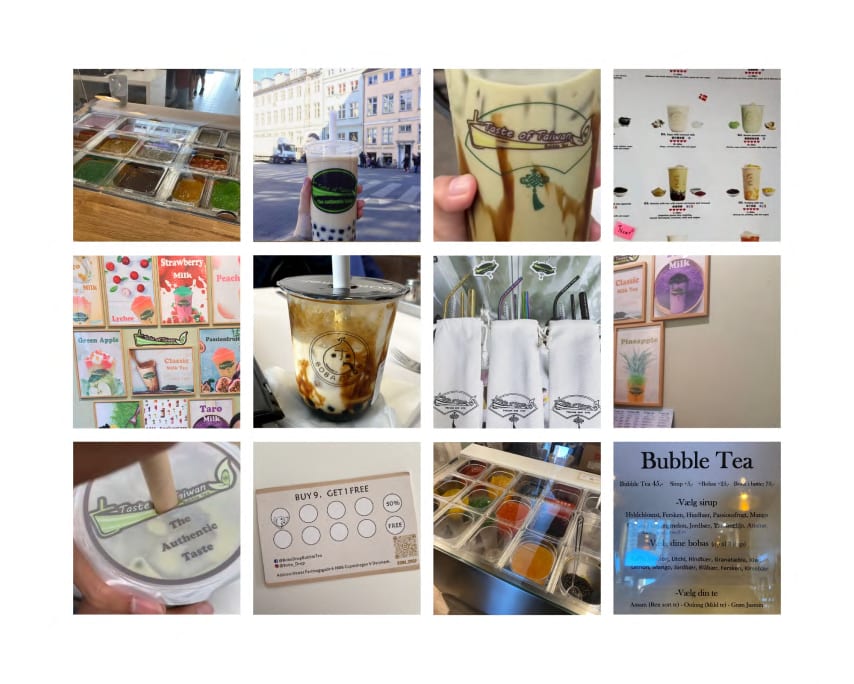
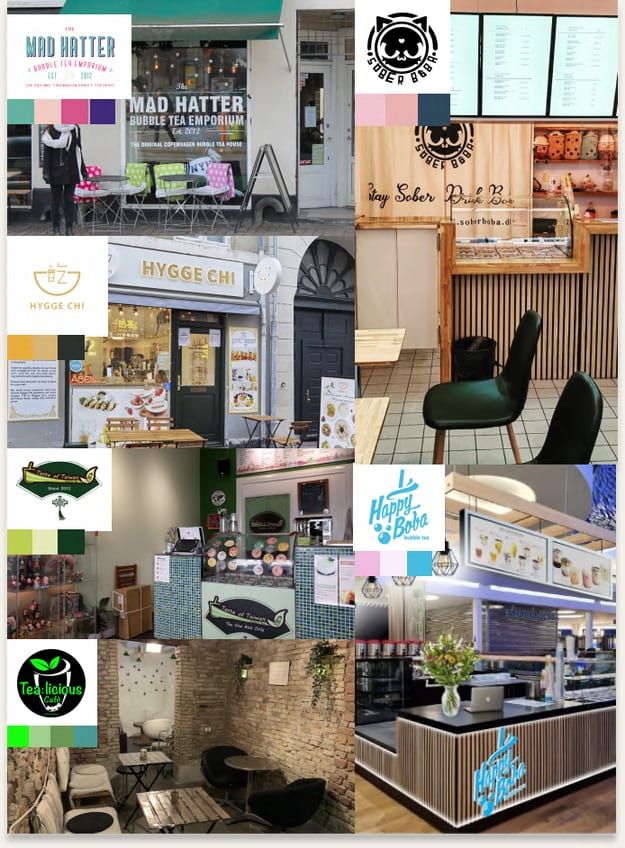
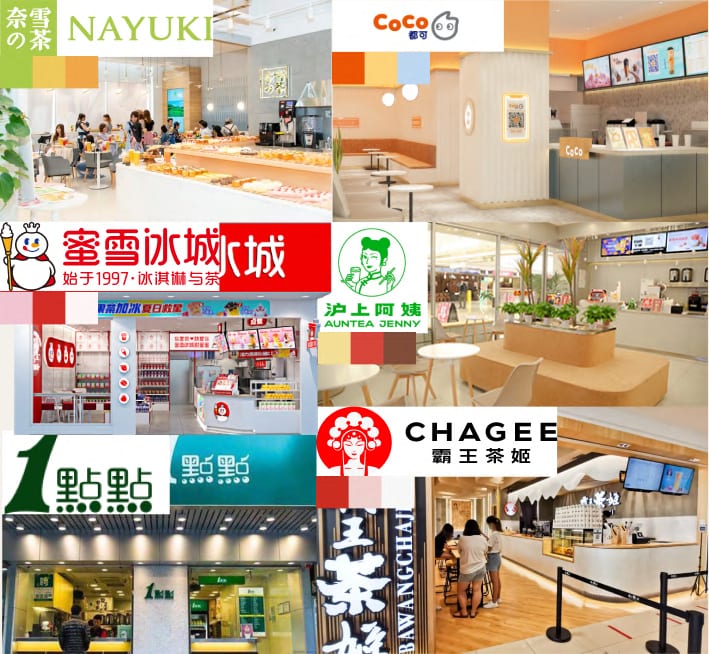
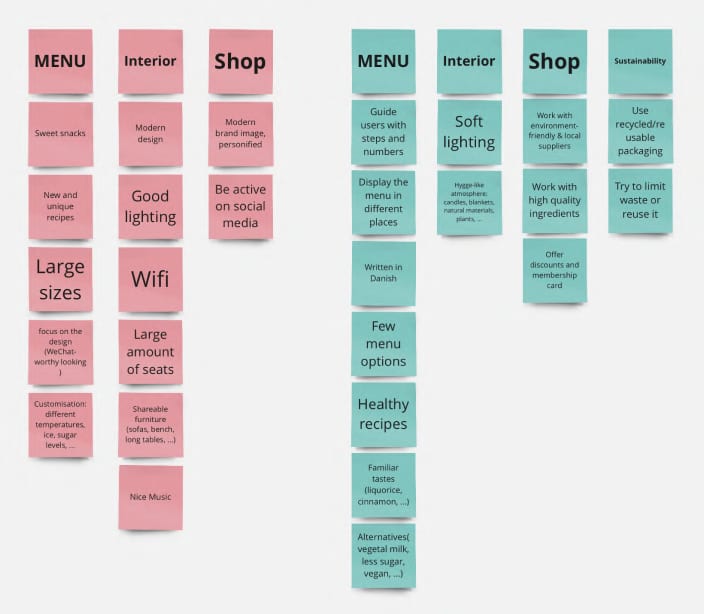
Listening in both cities. Desk research and a market benchmark, then a survey in Danish and in Chinese, a user-diary moodboard and semi-structured interviews in English and in Mandarin.
Personas
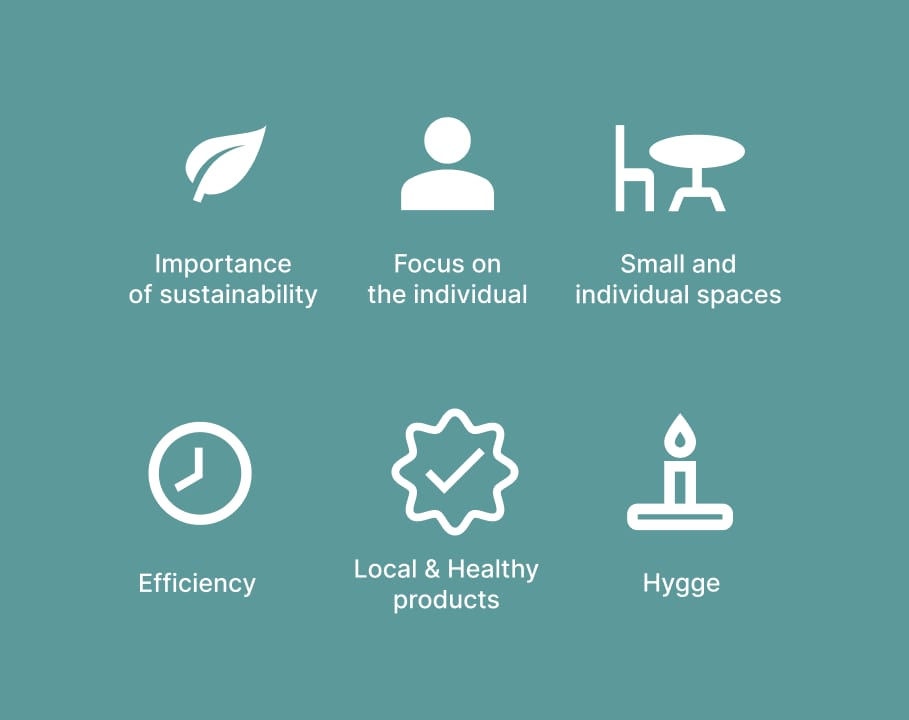
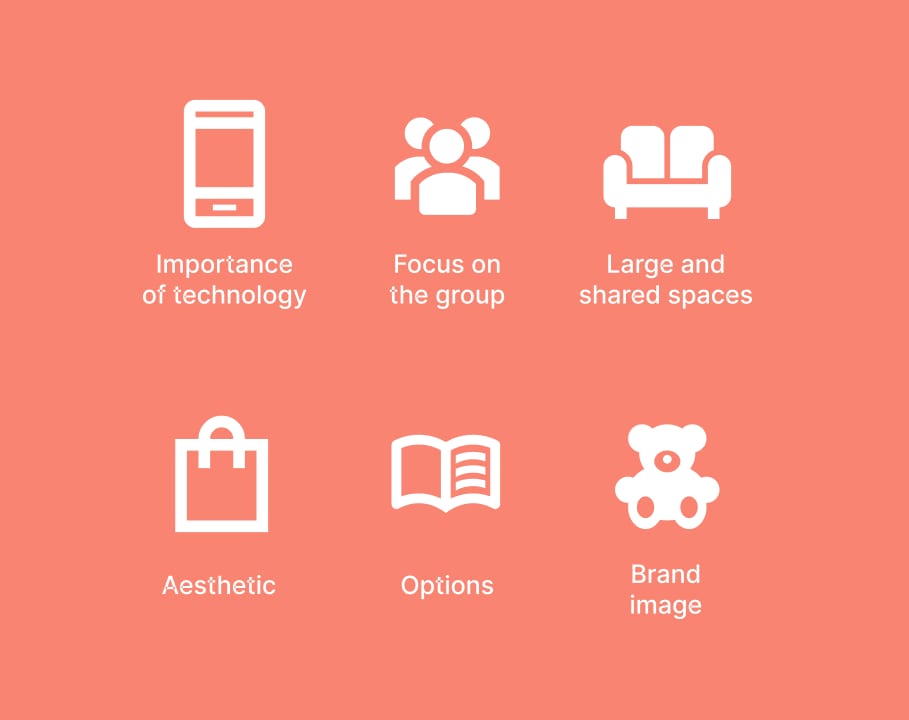
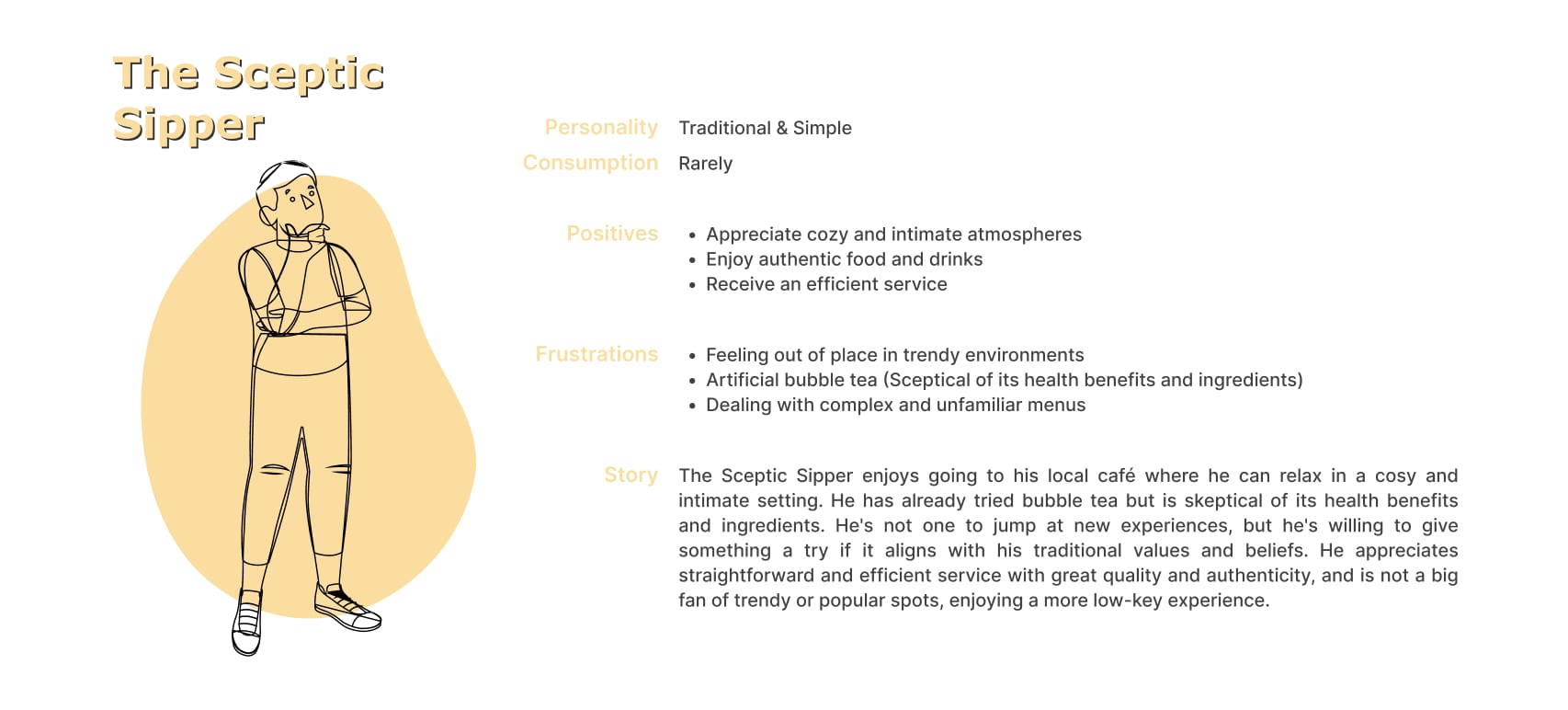
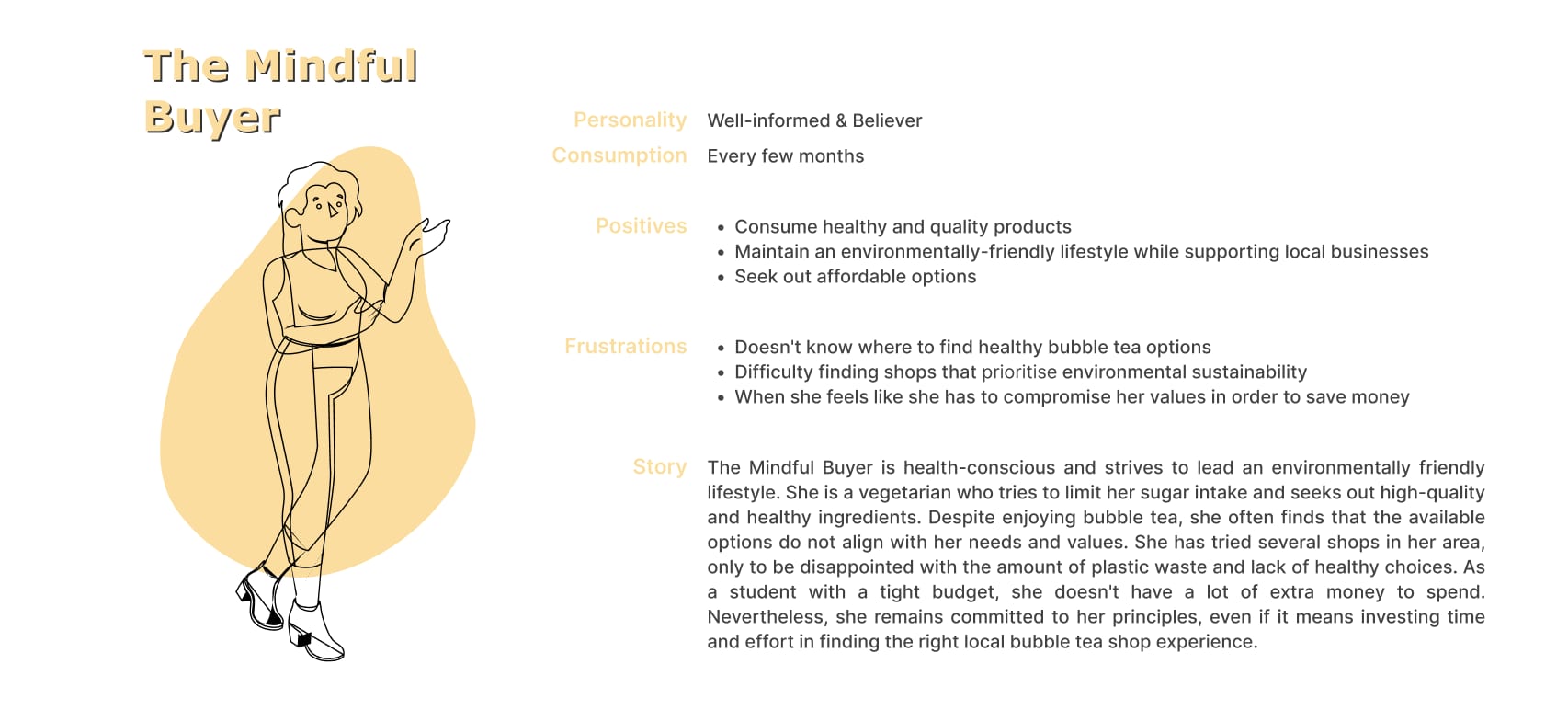
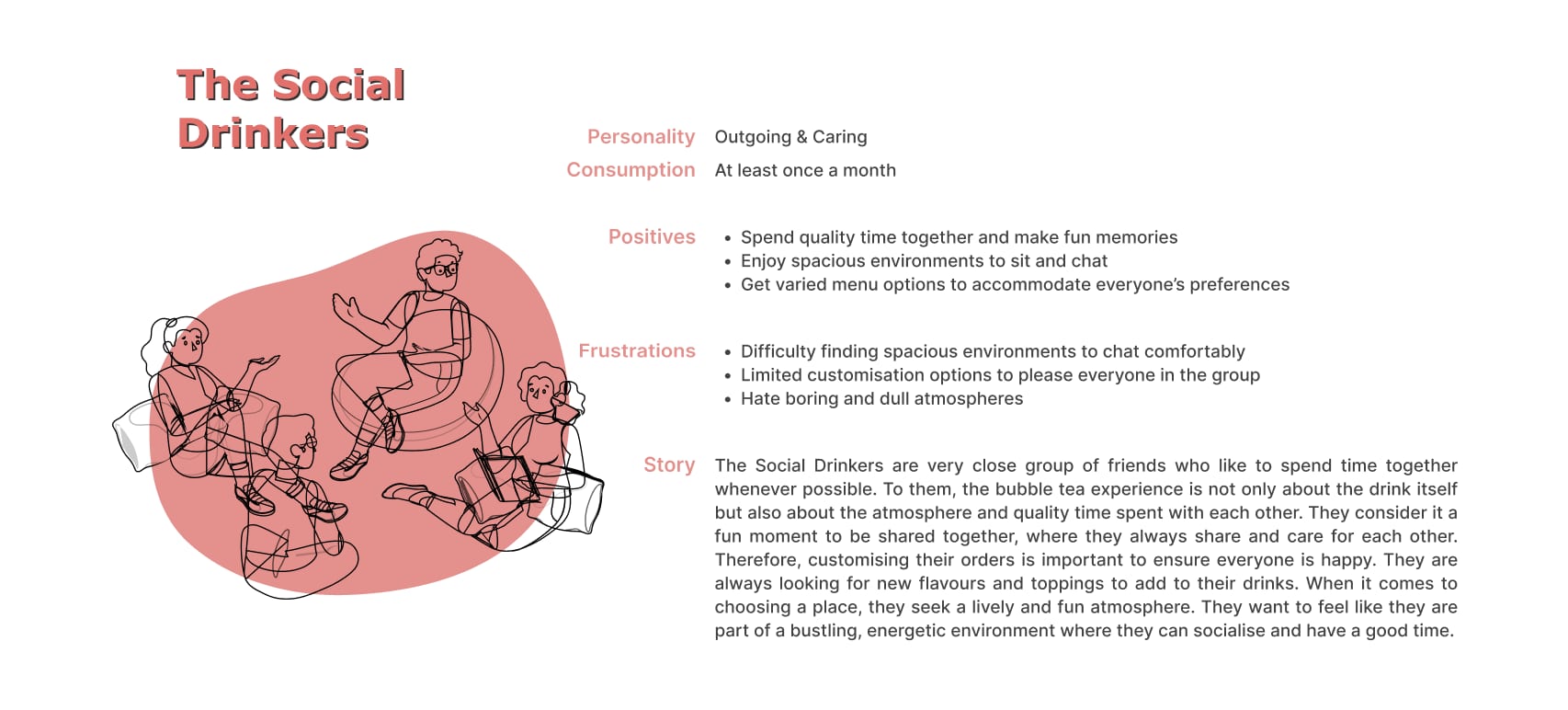
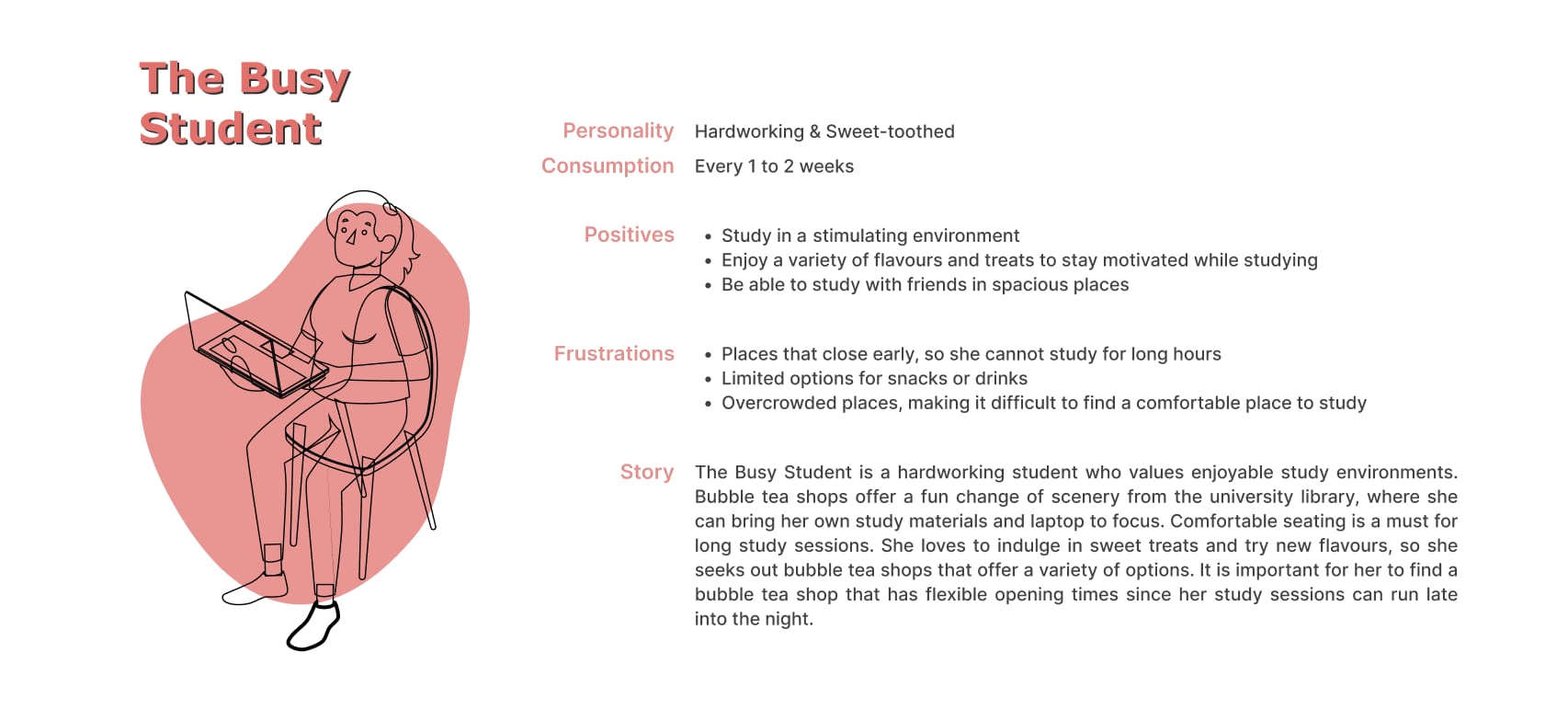
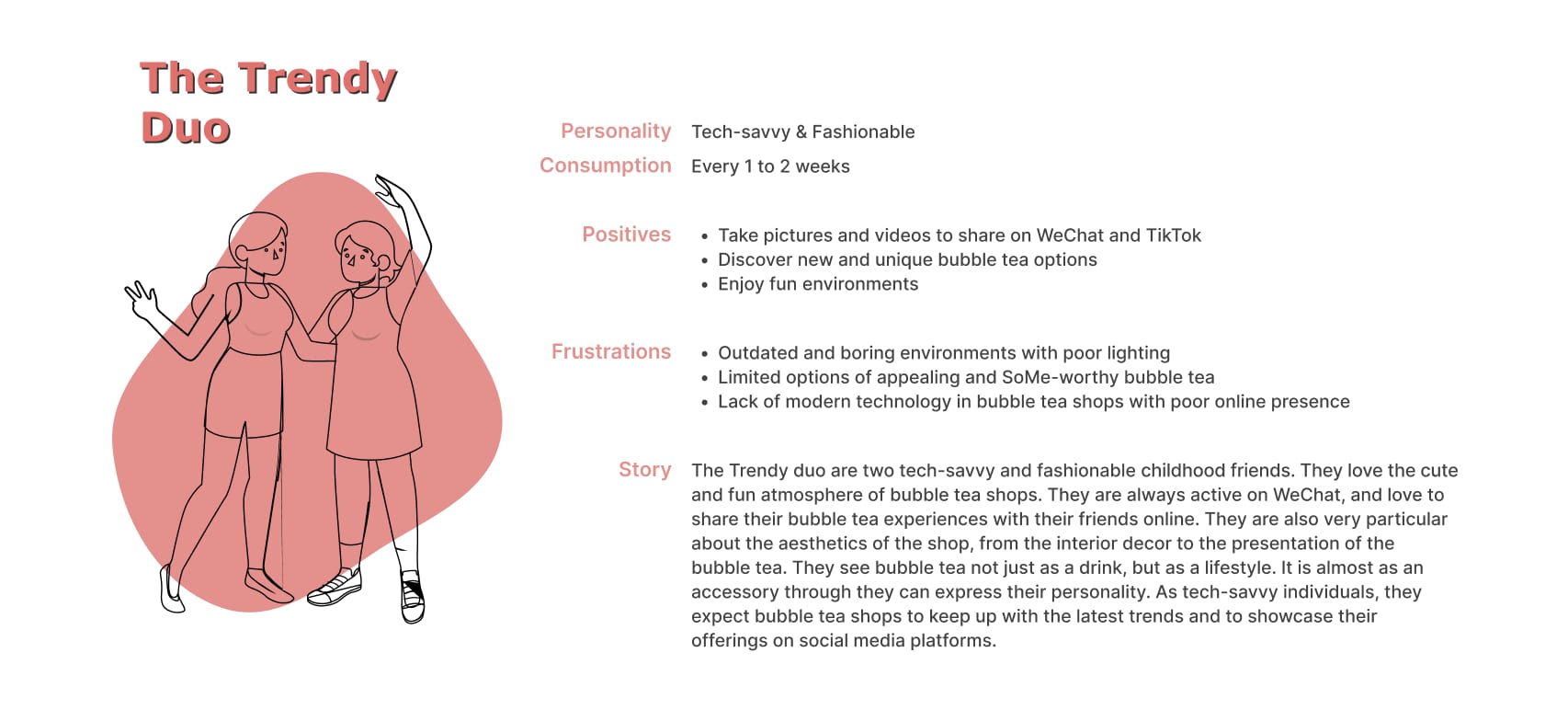
I built six personas, three per city, each from its own city’s research rather than a shared template: a persona built on Danish habits would have hidden what mattered in Beijing. In Copenhagen they are mostly people still to be won over to bubble tea; in Beijing, people for whom it is already social life. To avoid stereotypes, each is a user stance rather than an invented individual, drawn simply, described through emotions and character rather than sliders, and revised as my understanding of each culture grew.
Copenhagen
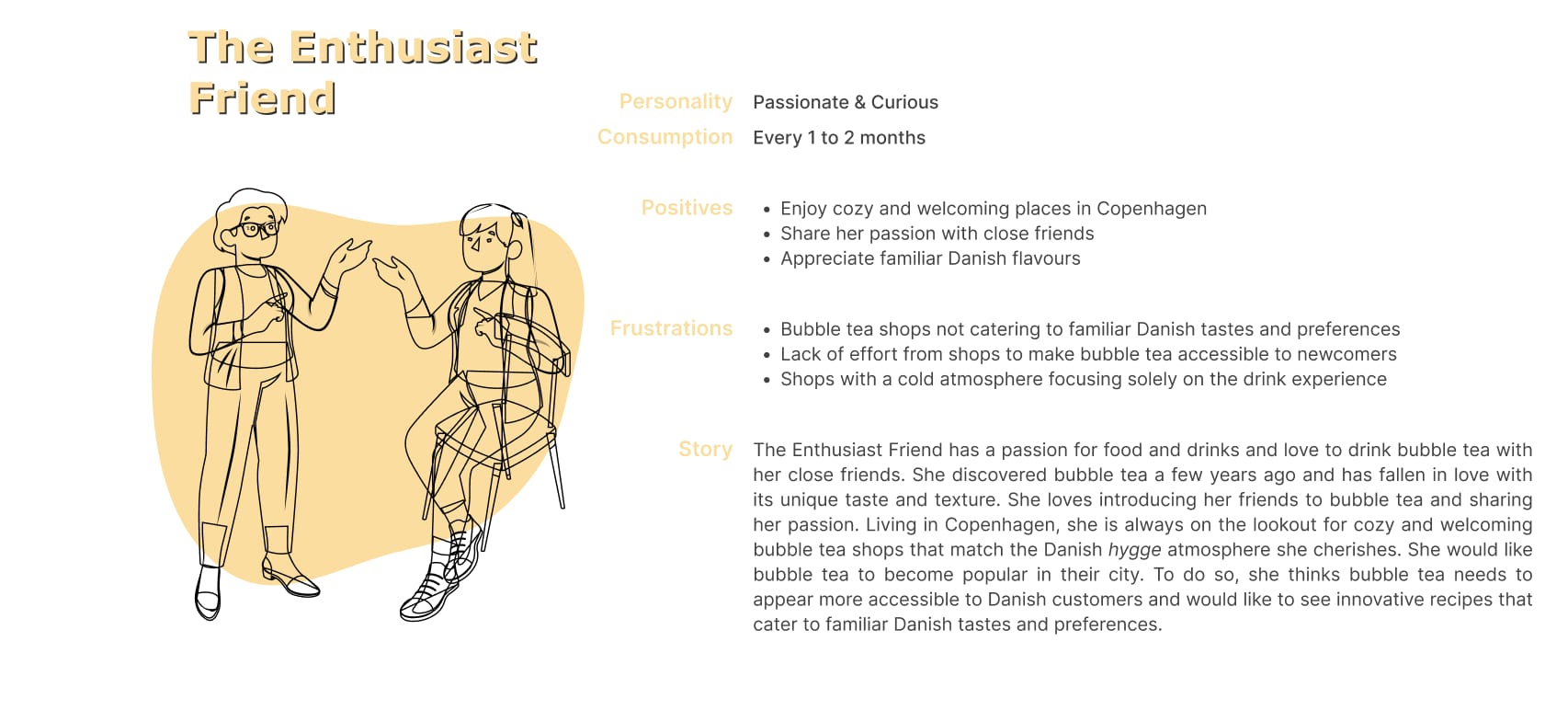
Beijing
Ecosystem map
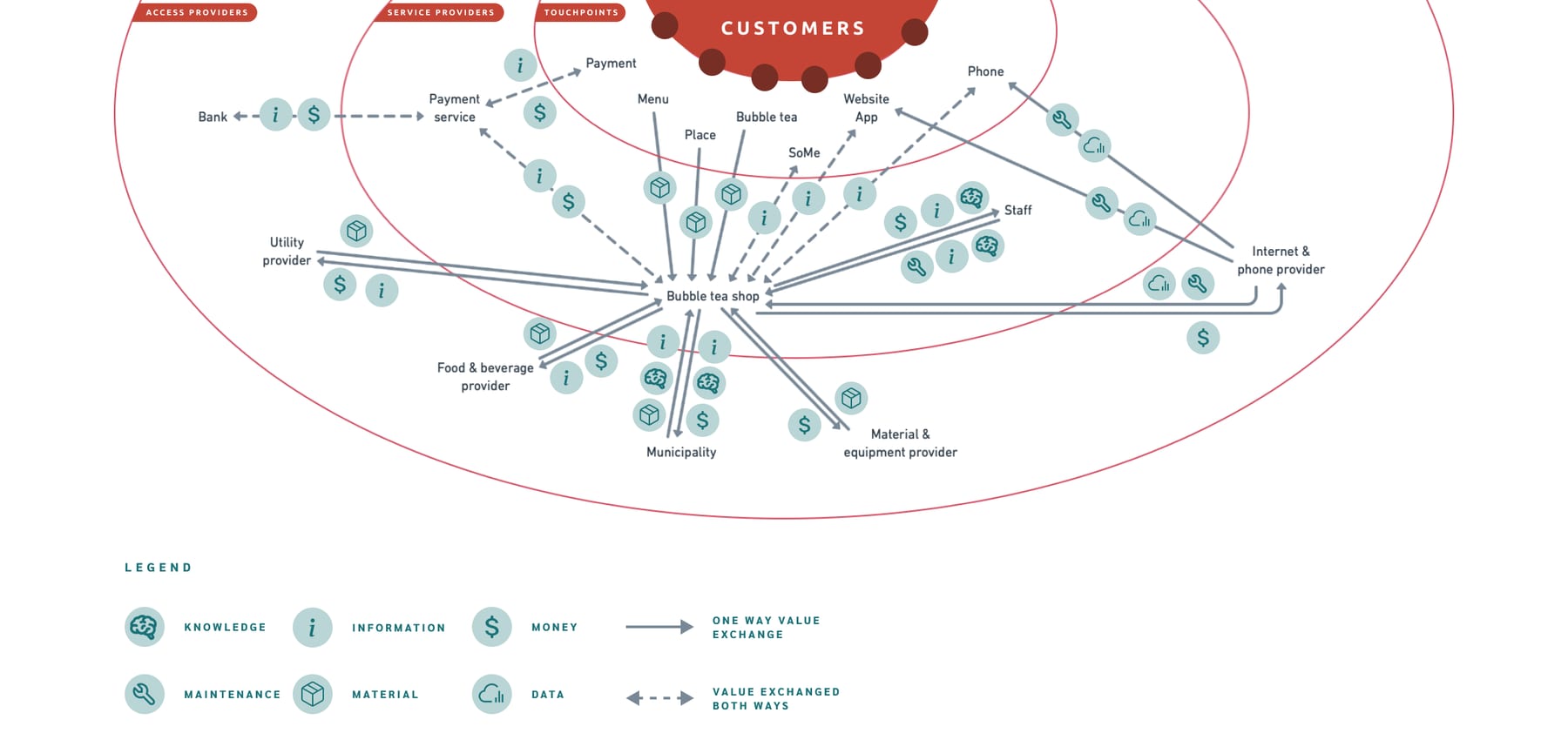
Before designing what the customer sees, I mapped what the shop depends on and what each actor gives and gets, from touchpoints to service providers to access providers such as the bank, the municipality and the phone network. It showed that the shop carries the main responsibility for the experience, so that is where the design focused.
From journeys to a service
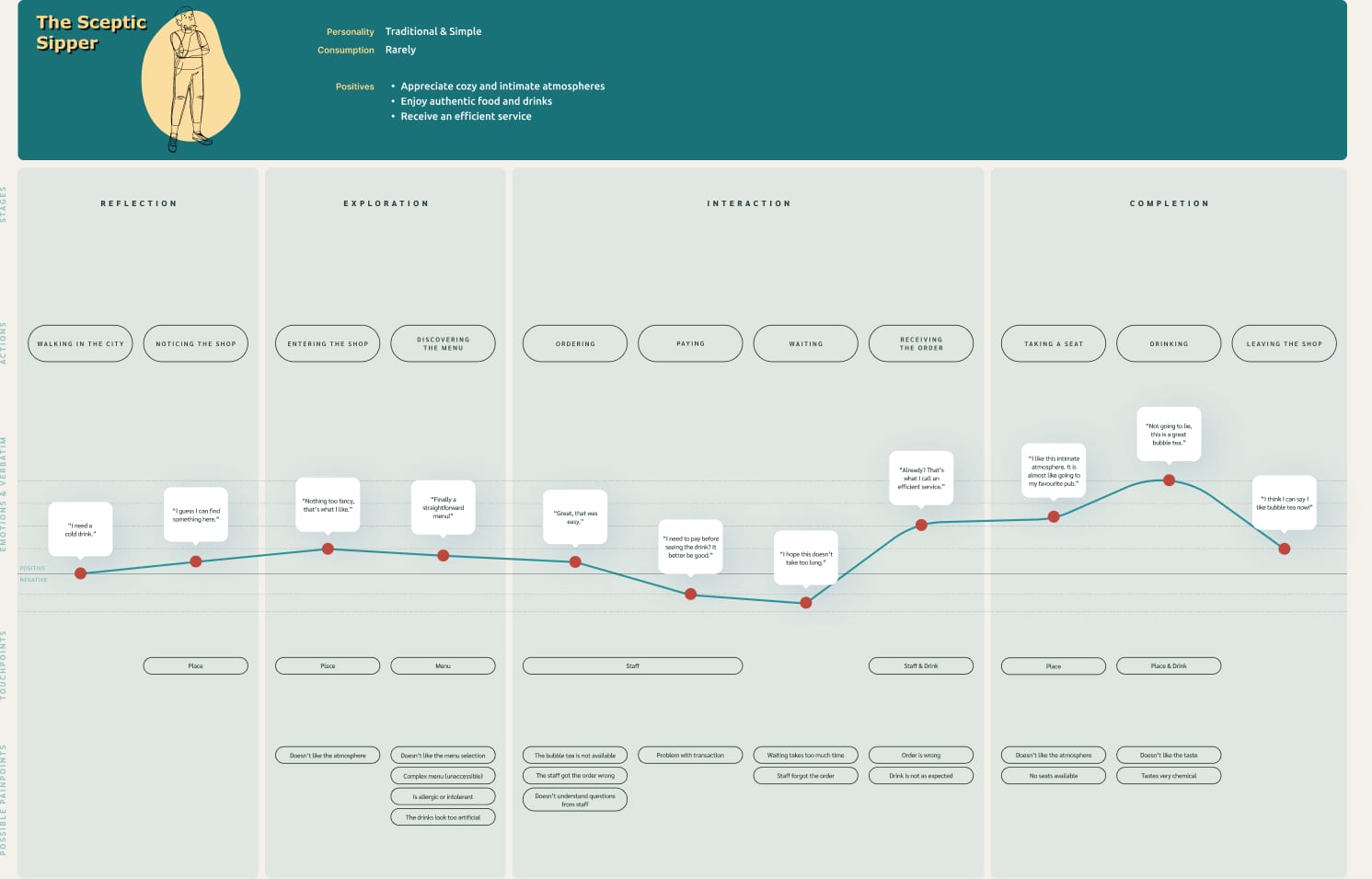
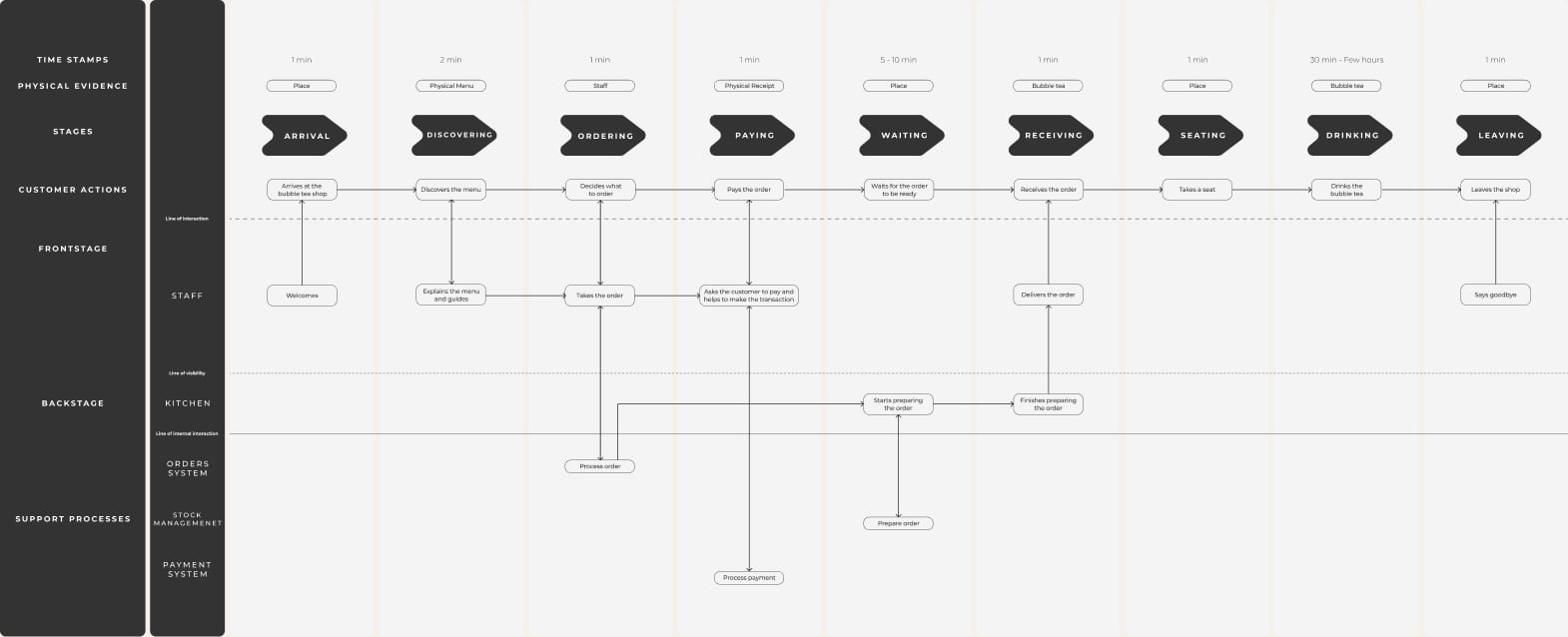
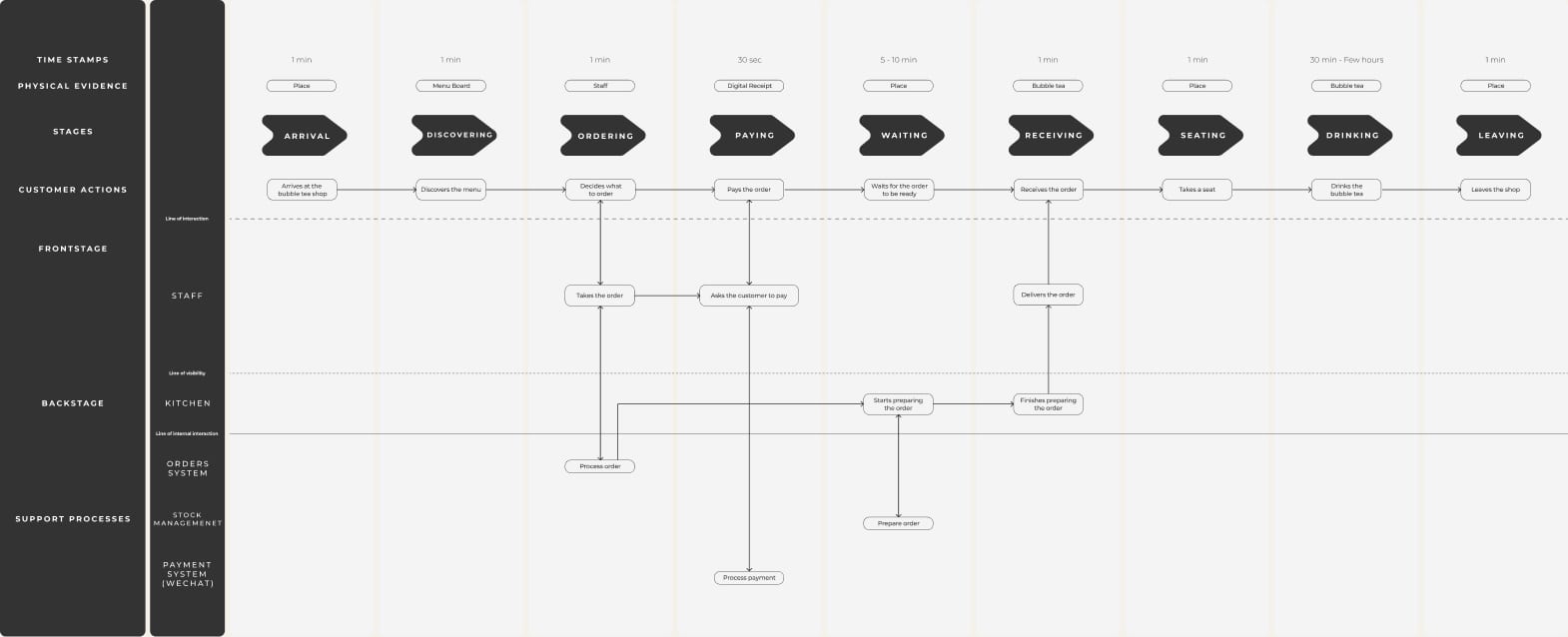
Each city got a scenario built around its main persona: a journey, the moment that matters most written as a use case, and a service blueprint of the shop behind it. A blueprint looks neutral, so the easy choice was one for both shops. But there is no universal way to serve a customer: who greets them, where the menu is and how they pay all change between the cities.
Copenhagen: the Sceptic Sipper
He rarely drinks bubble tea, prefers simple, traditional food and distrusts anything that looks artificial. Win him over, and the shop wins over the many Danes who have never tried the drink. The Copenhagen concept followed: reassure, explain, and make the first sip easy.
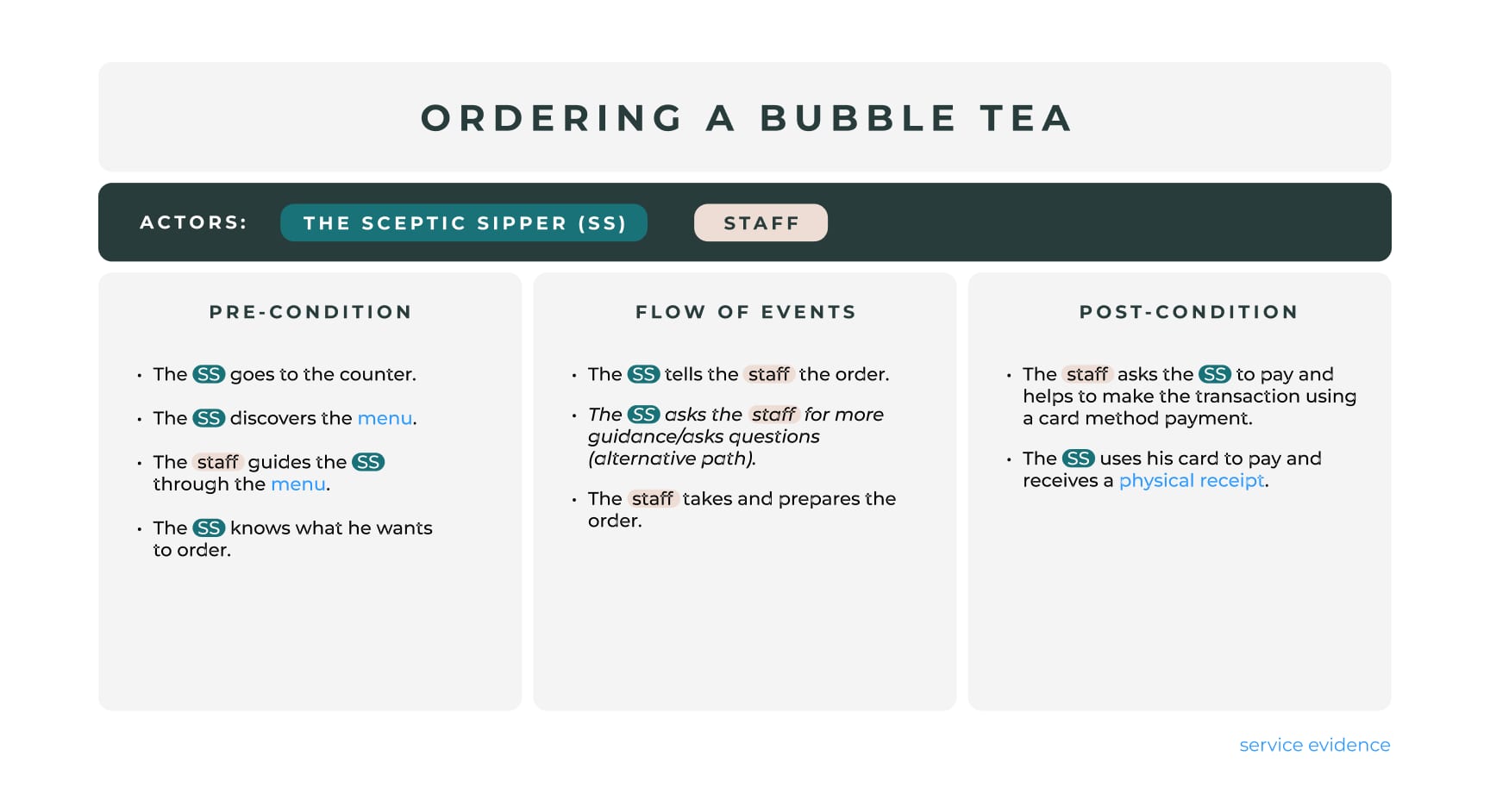
Ordering is the make-or-break moment: a first-timer facing teas, toppings and sweetness levels he does not understand. The use case writes it down for him and for the staff; the blueprint shows what the shop must do to support it.
Beijing: the Social Drinkers
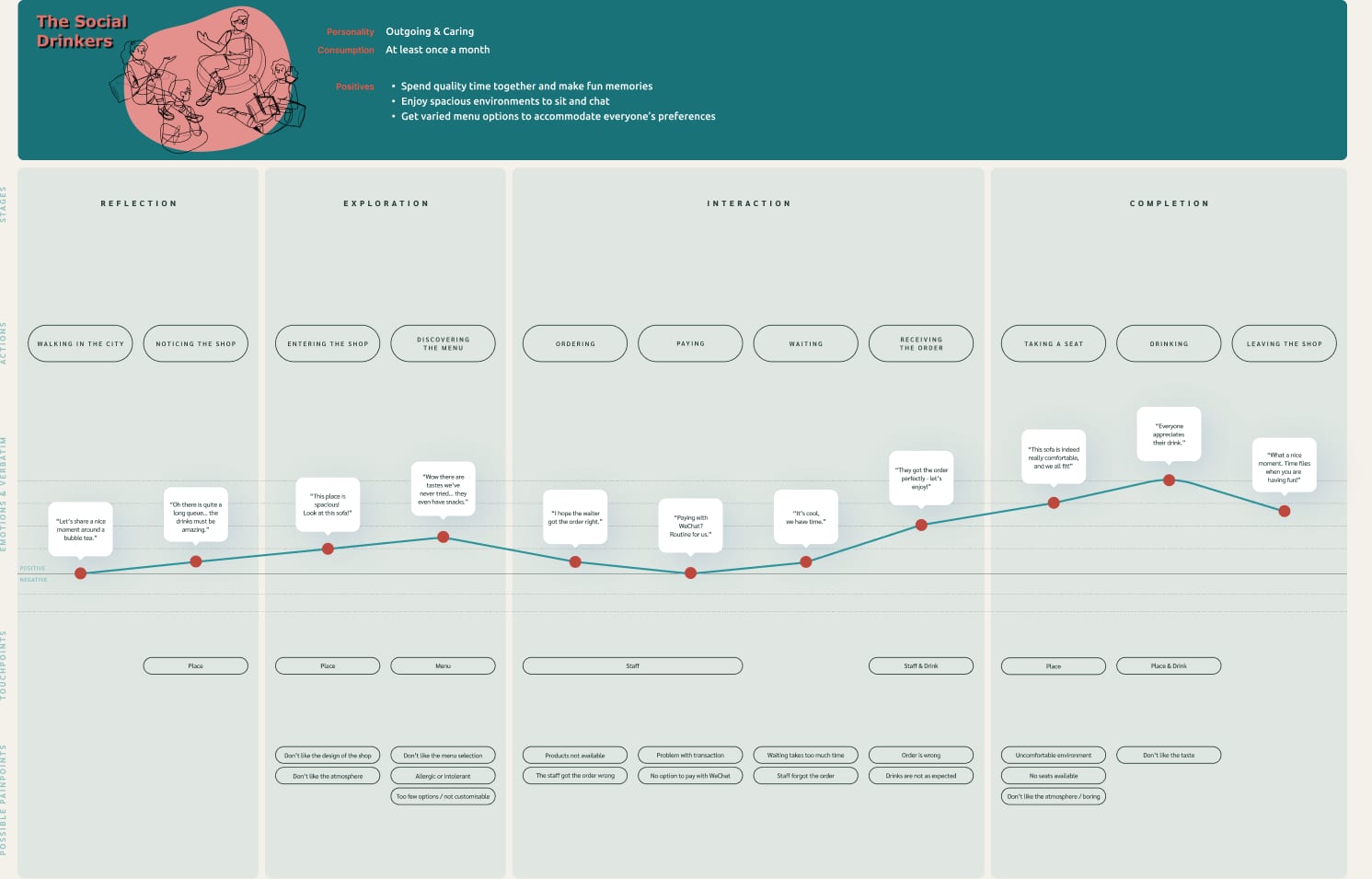
A group of friends for whom bubble tea is a regular, shared ritual. They know the drink; they judge everything around it: room to sit together, a menu varied enough for everyone, a payment that just works on the phone. The Beijing concept followed: space, choice and a seamless digital flow.
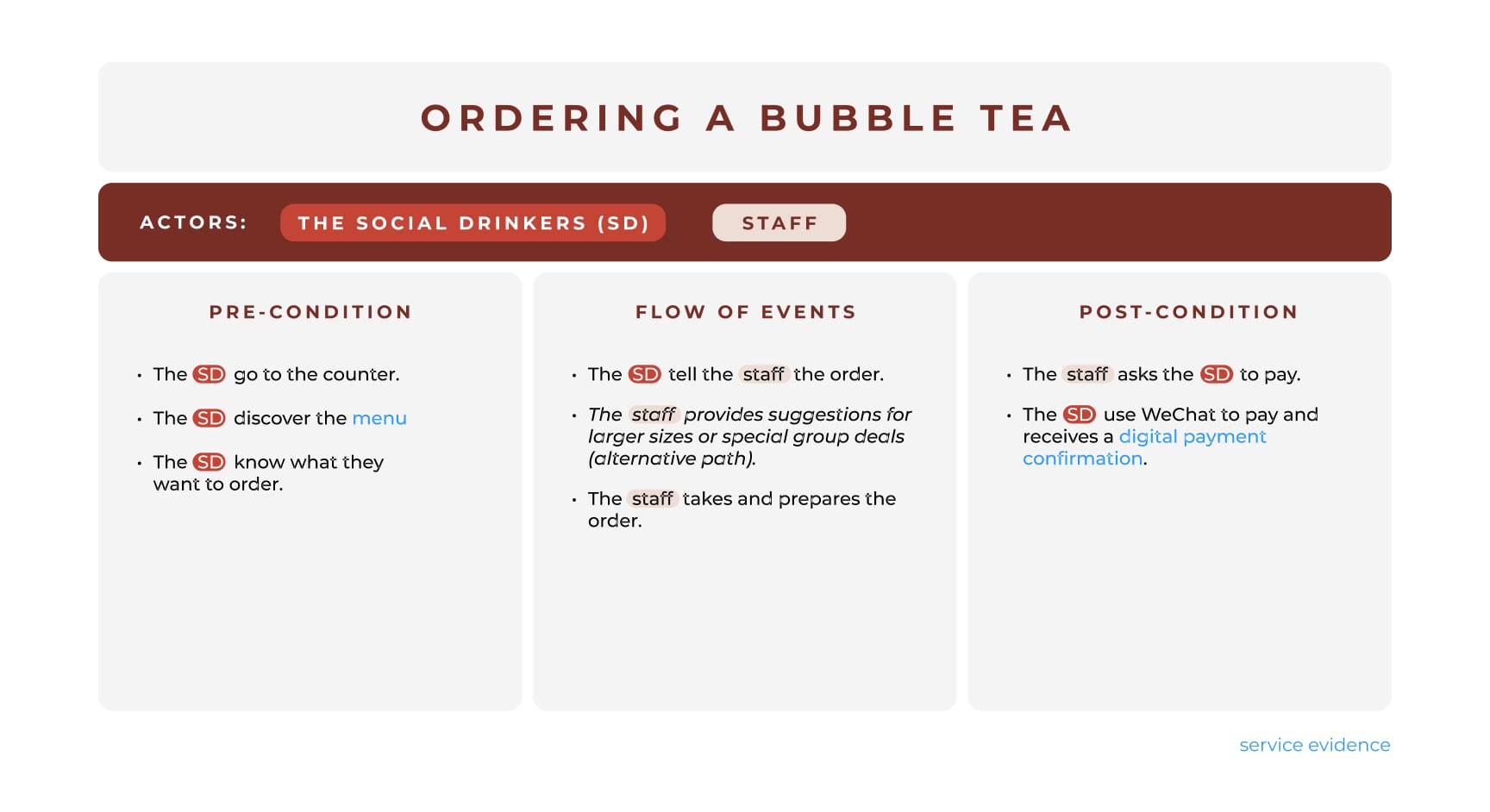
Here too, ordering is the key moment, for the opposite reason: not guidance, but speed and choice for several people at once.
The test
Before delivery, the concept went back to the people it was for: a one-hour online workshop with a participant from each city, both interviewed earlier. Each rated how comfortable, useful and appealing their own city’s brand, menu and 3D shop felt, and picked the two psychological needs that matter most to them.
The format had to fit the participants too. A think-aloud session asks people to voice criticism, which a participant from a collectivist culture may avoid to keep the harmony. So each session ran one-to-one, with open questions, a 0 to 5 scale with no middle option to retreat to, and UX cards to name feelings without having to put them into words.

The sessions confirmed the concept and changed it. Both participants understood the name in their own language, with no awkward meaning, and found it easy to remember; the Chinese participant said the character “adds authenticity”. The Danish participant chose belonging and control, and asked for clearer menu words (“topping” means little to a newcomer), top picks and familiar flavours such as cinnamon, even a drink with alcohol. The Chinese participant chose pleasure and belonging, wanted a more playful shop, and asked straight away about wifi, WeChat payment and a phone menu, questions the Danish participant never raised. I updated the menus and shop visuals after it.
One brand, two services
The name. The research kept pointing to the same contrast. In Copenhagen, people spoke about themselves: a small table, a drink made their way, a quiet moment. In Beijing, they spoke about their friends: a big table, a menu where everyone finds something, a moment to share and post. One culture leans towards the individual, the other towards the group. A brand for both could not pick a side.
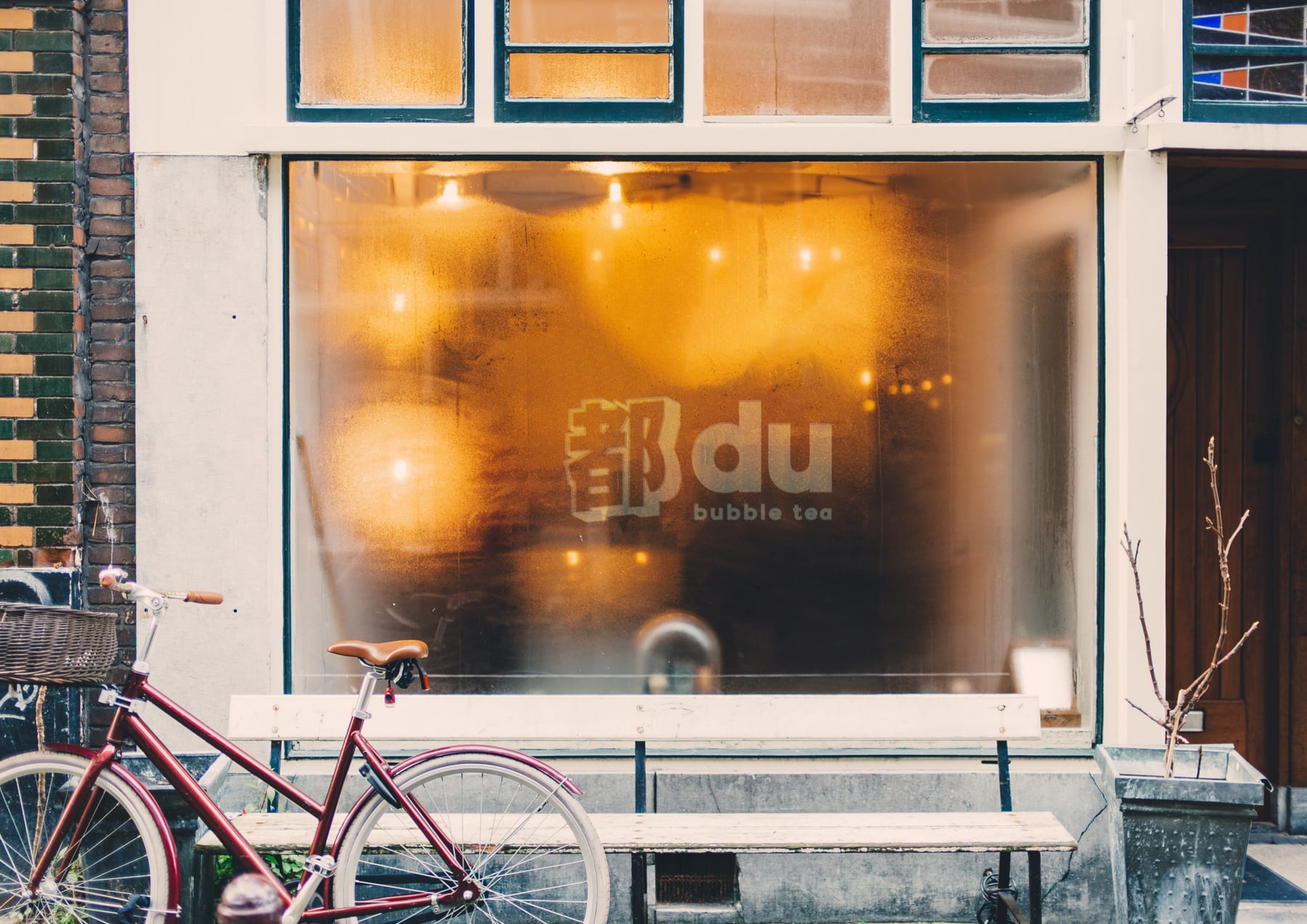
It became 都du, one name with two readings:
- In Danish, du means “you”: the individual, a drink made for one person, the small hygge moment Danish customers described.
- In Chinese, 都 means “all, the whole”: the group, a drink best enjoyed together, the shared moment Chinese customers described.
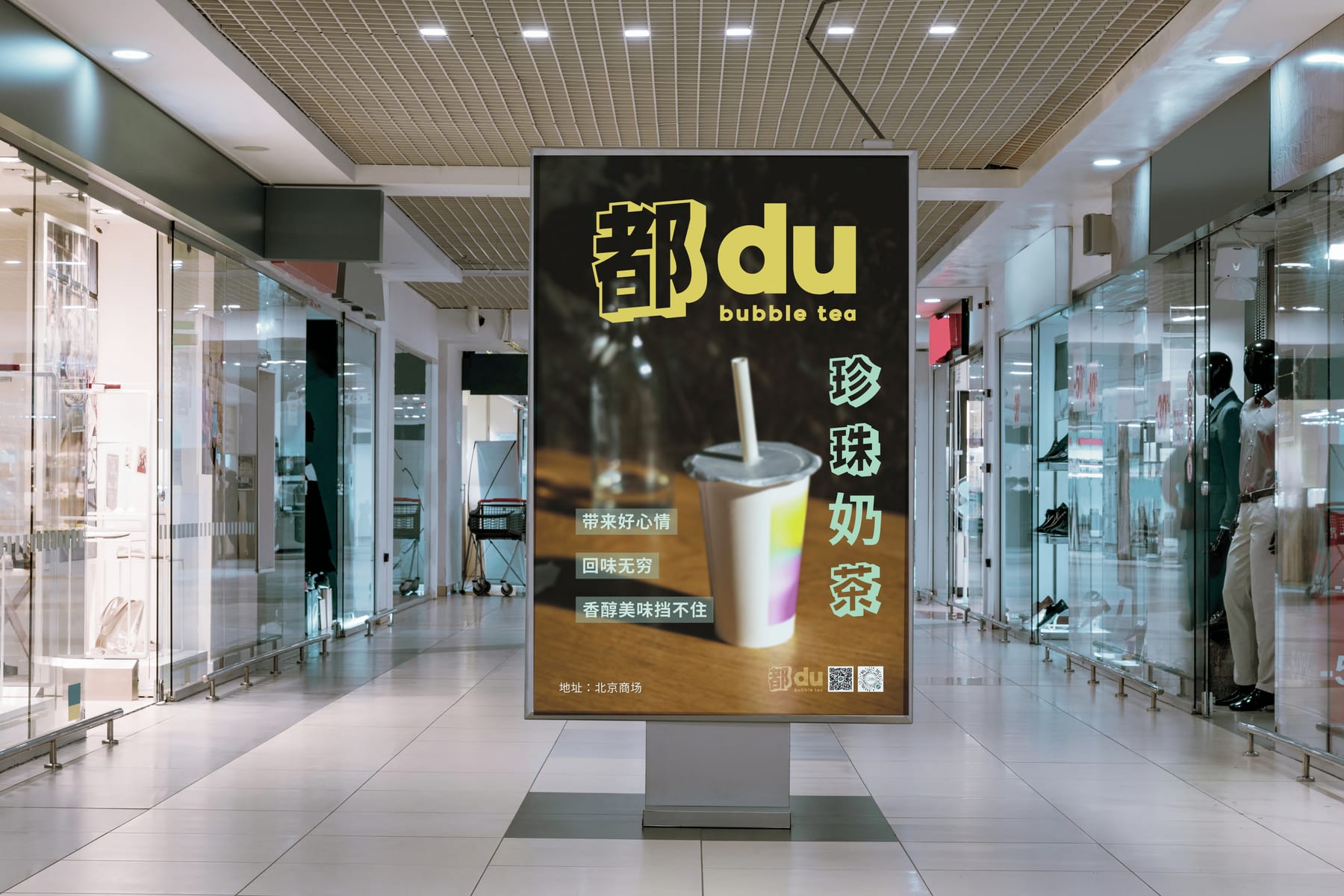
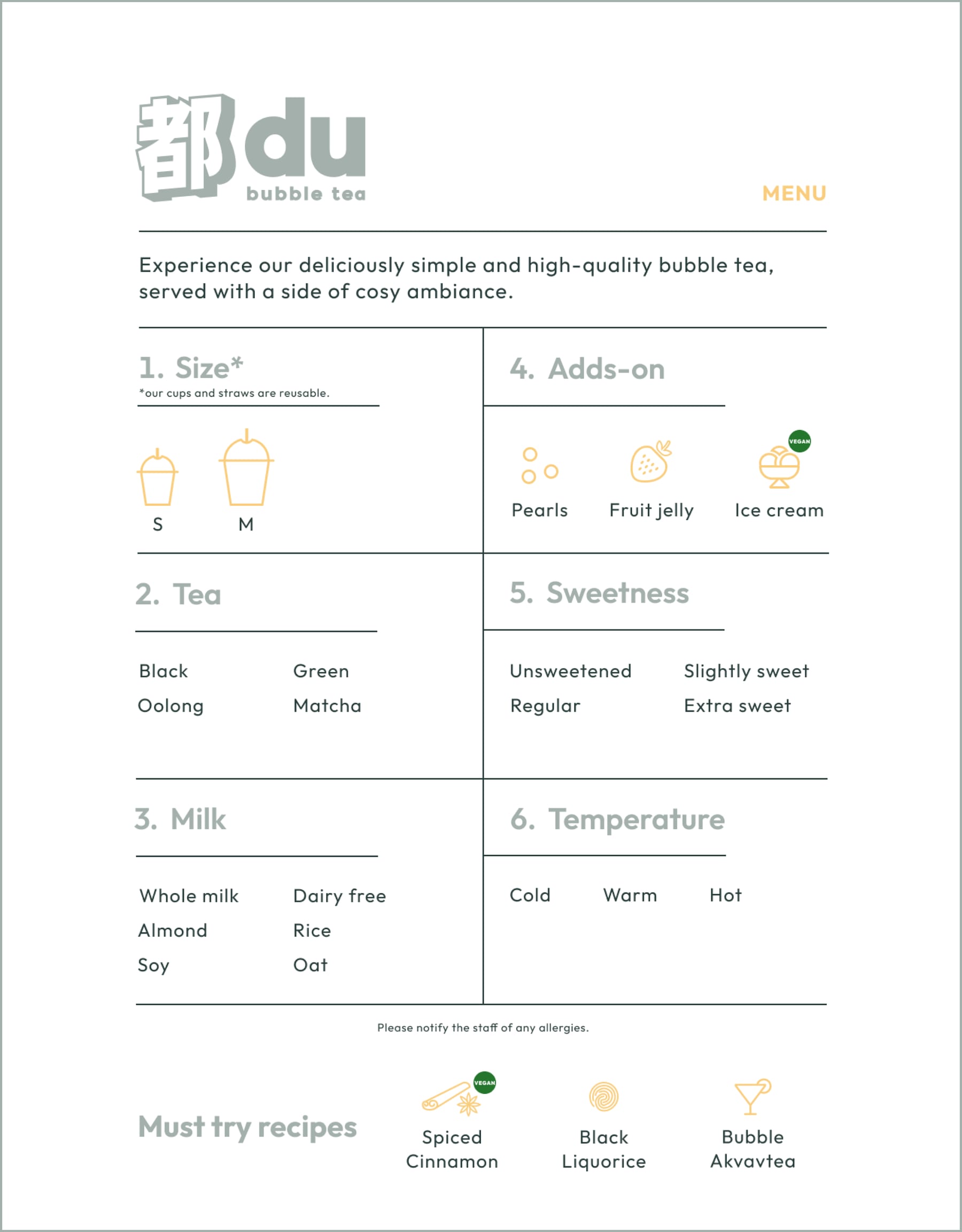
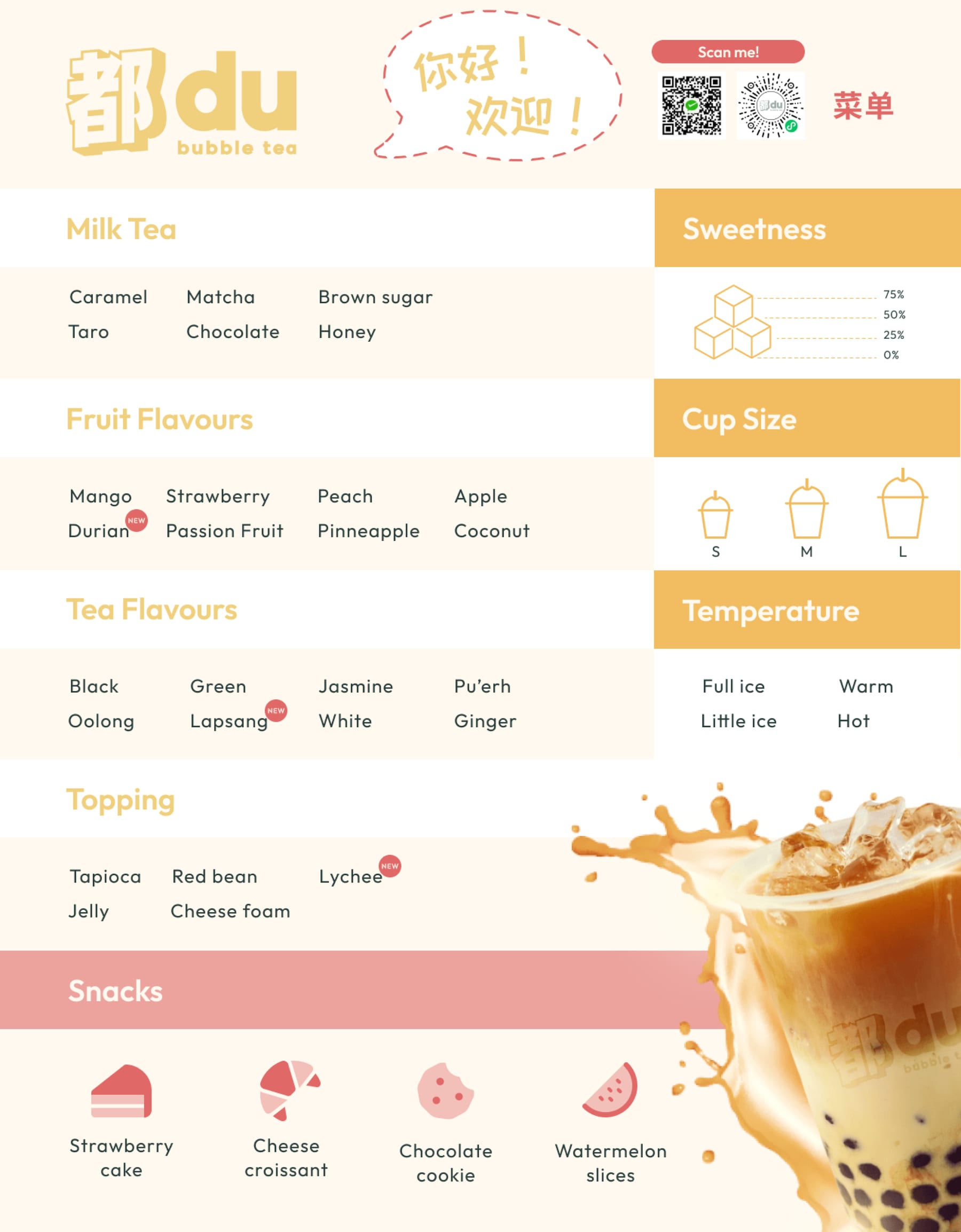
What stays, what changes. The name, the logo and the colours stay; everything else may differ. Copenhagen leans small, local and calm; Beijing large, shared and digital-first. The menus show it best: same structure, but Beijing’s leads with QR codes and the WeChat mini-programme, because that is where ordering starts.
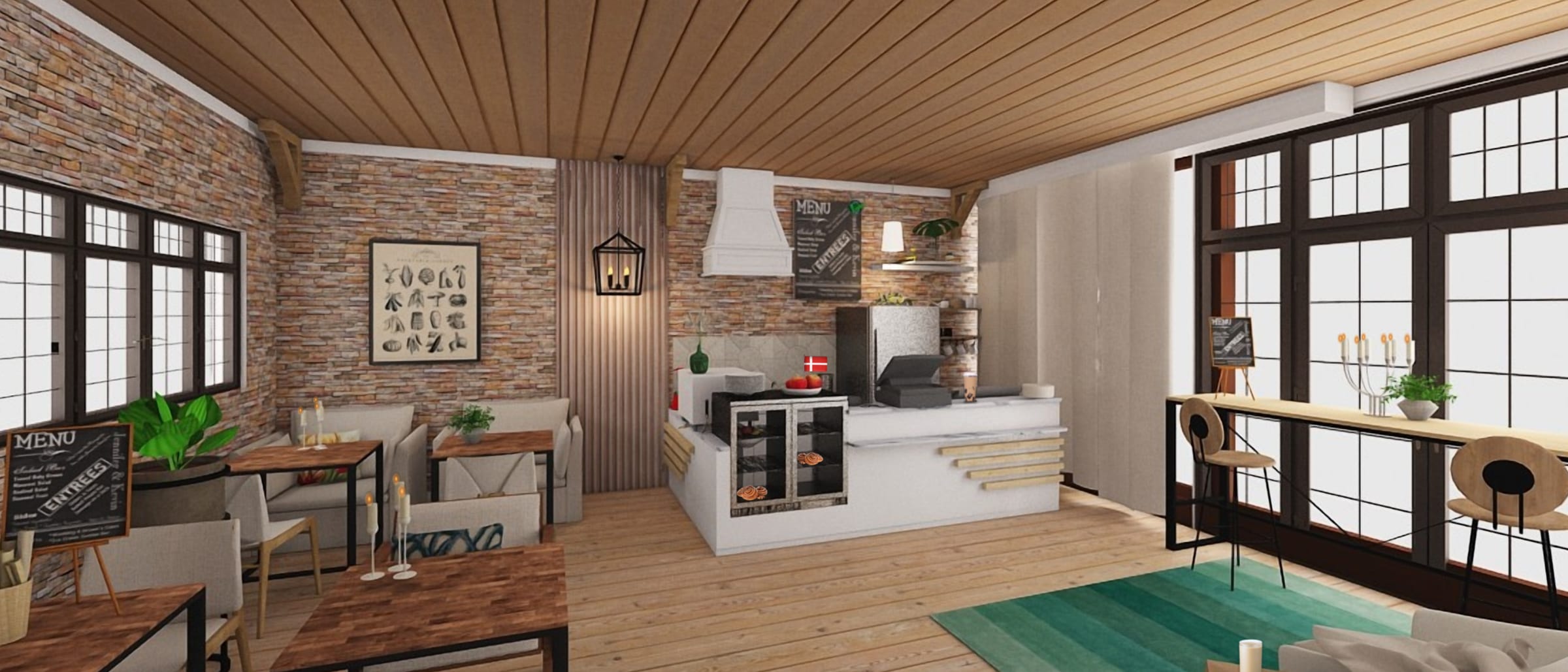
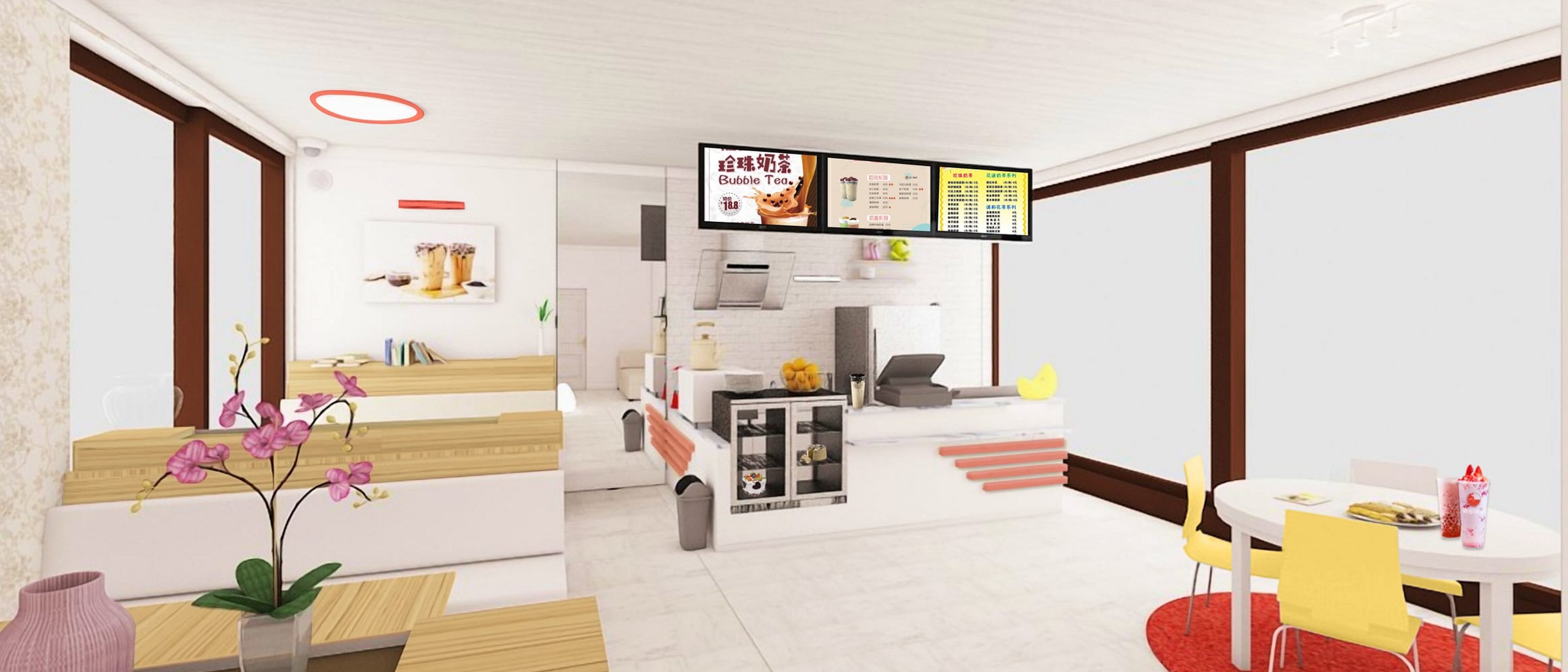
The shops, shown at the top of this page, follow the same logic: brick, wood, candlelight and tables for two in Copenhagen; a bright open room, screens above the counter, round tables for groups and mirrors and lights for photos in Beijing.
The results. Two complete services under one brand, each in its own product report: brand, menu, shop interior, personas, journeys, blueprints and use cases, plus launch recommendations from staff training and stock to loyalty, local events and sustainable packaging.
Where the method went
The pre-project phase and the per-phase reflections became Cultural Sensitivity in the Service Design Process, a toolkit that asks four things of the designer at every phase: recognise cultural differences and your own biases, learn from the users, respect them in the tools and tests, and adapt the service until each group finds it its own. The fieldwork became the research base of the Bloomsbury chapter.
I have carried that work on since October 2023 as a research affiliate of the Service Design Lab at Aalborg University. And I use those four steps in every project, not only across countries: a designer is never truly the end user.
Read about the toolkit and the chapter →
Takeaways
- Culture is everywhere, around us and within us, whether we like it or not. It is not a phase of the project: it shaped every decision and every tool. Even the words of the research had to be checked: “simple”, “healthy” and “value” did not mean the same thing to Danish and Chinese participants, and each city needed its own blueprint.
- The designer is never neutral. Before meeting a single user, we looked at our own background, norms and assumptions. Cultural empathy starts with accepting that we belong to a culture too, and that it shapes what we see in others.
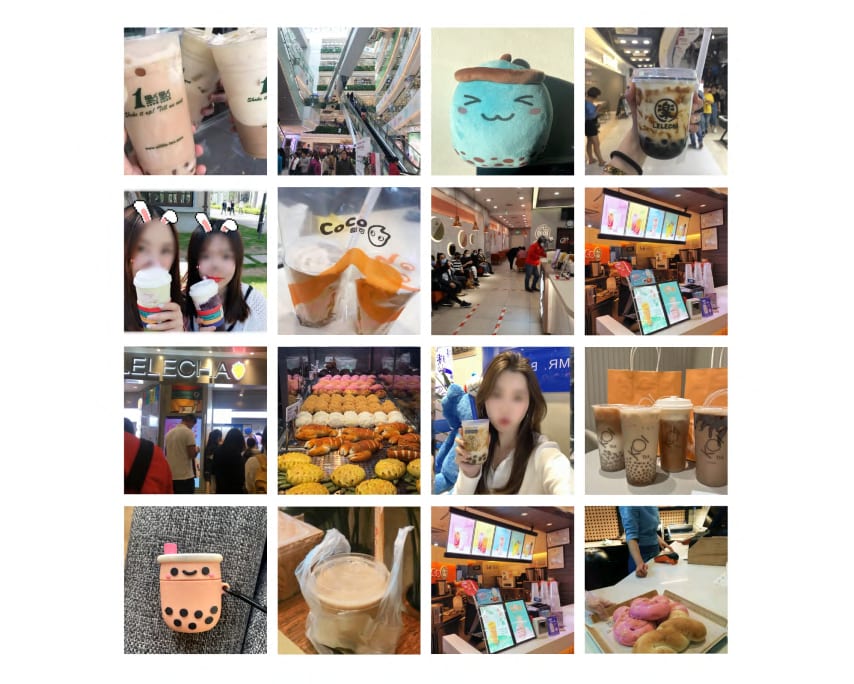
- The photo diaries told the story before the interviews did. Copenhagen participants photographed ingredients, sustainable choices and their own drink; Beijing participants, friends, shop interiors and branded merchandise. What people choose to capture is data.
- A persona can be a respectful act. Naming a stance, such as the Mindful Buyer, rather than inventing a person: depicting others carefully is the first step towards empathy.
- Empathy is built with users, not for them. Treated as experts in their own experience, participants made the concept better.
- Test what you cannot judge yourself. A designer from neither culture cannot tell whether a name, a colour or a word lands well.