
The context
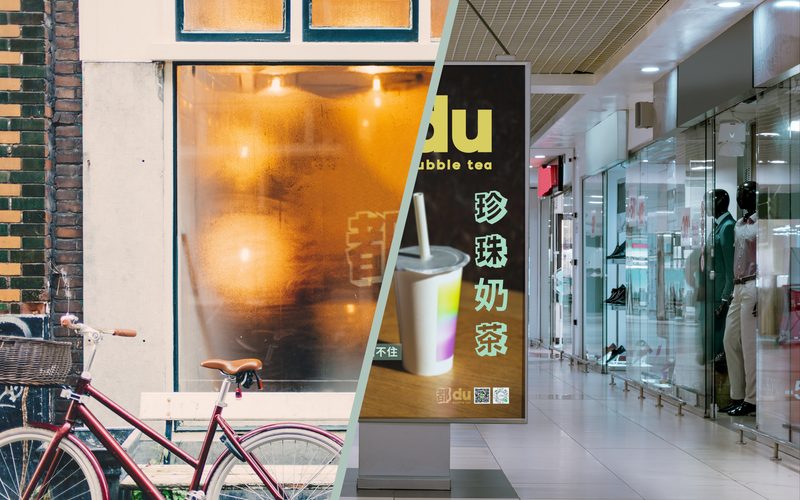
The Service Design Lab at Aalborg University is where I did my master’s and where I have been a research affiliate since 2023. The work here grew out of the Du Bubble Tea thesis: the fieldwork in Copenhagen and Beijing kept turning up moments where the method, not the users, was the problem.
The challenge
Most service design methods assume the designer and the user share a culture. The double diamond does not say what to do when they don’t, and neither do most of the tools inside it.
The research question
What has to change in each phase of the service design process when the designer and the people they design for do not share a culture?
The process
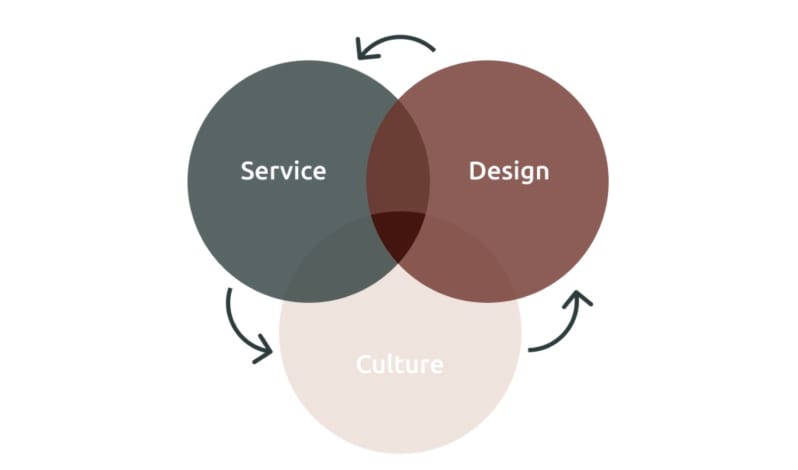
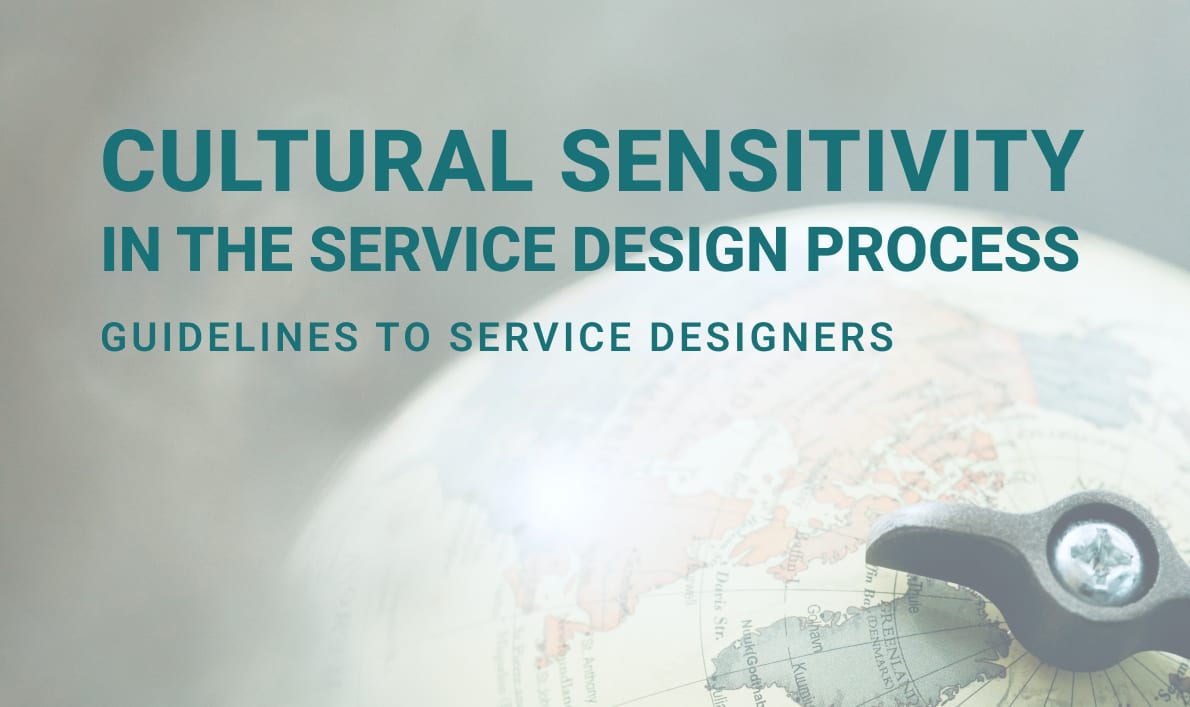
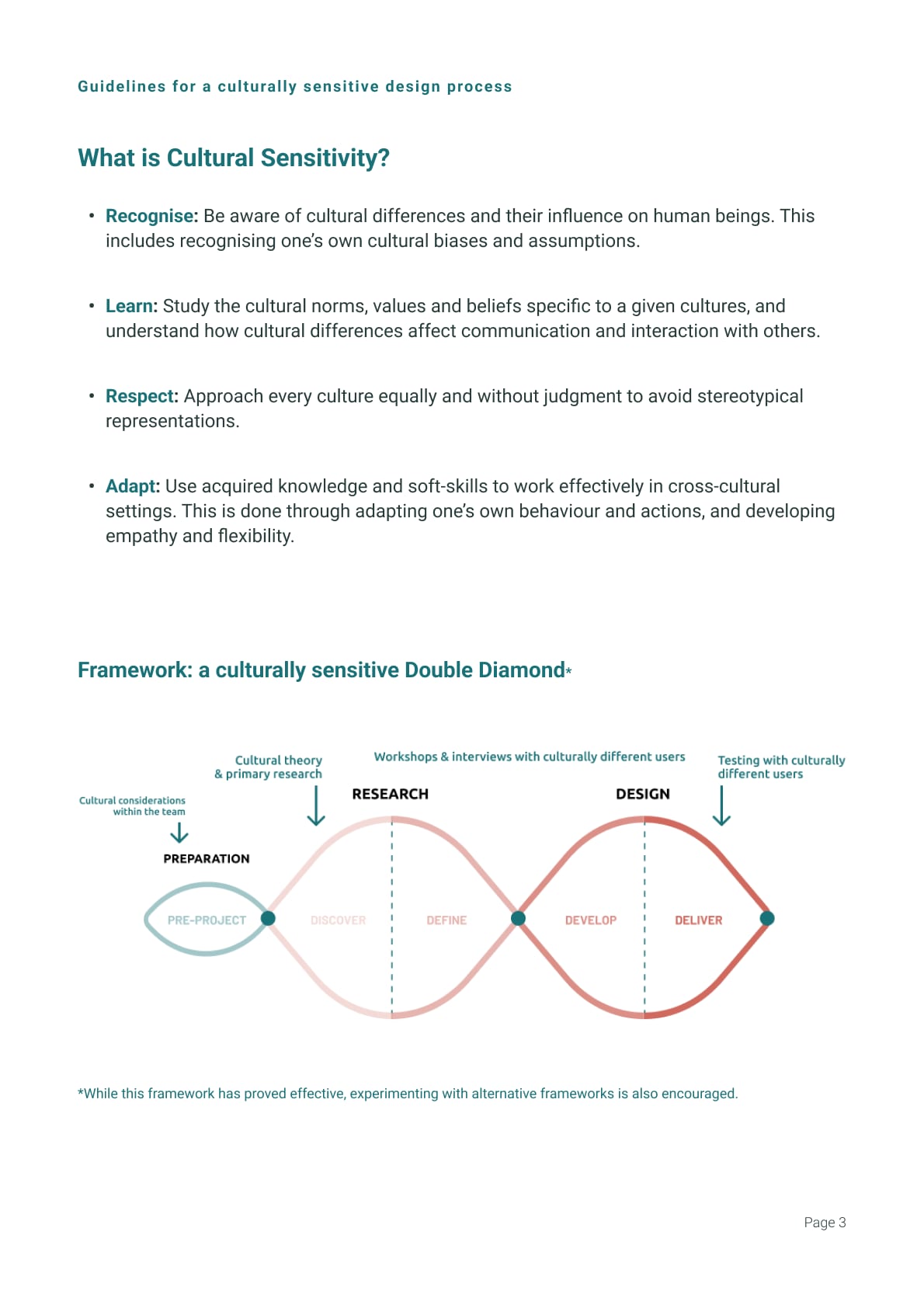
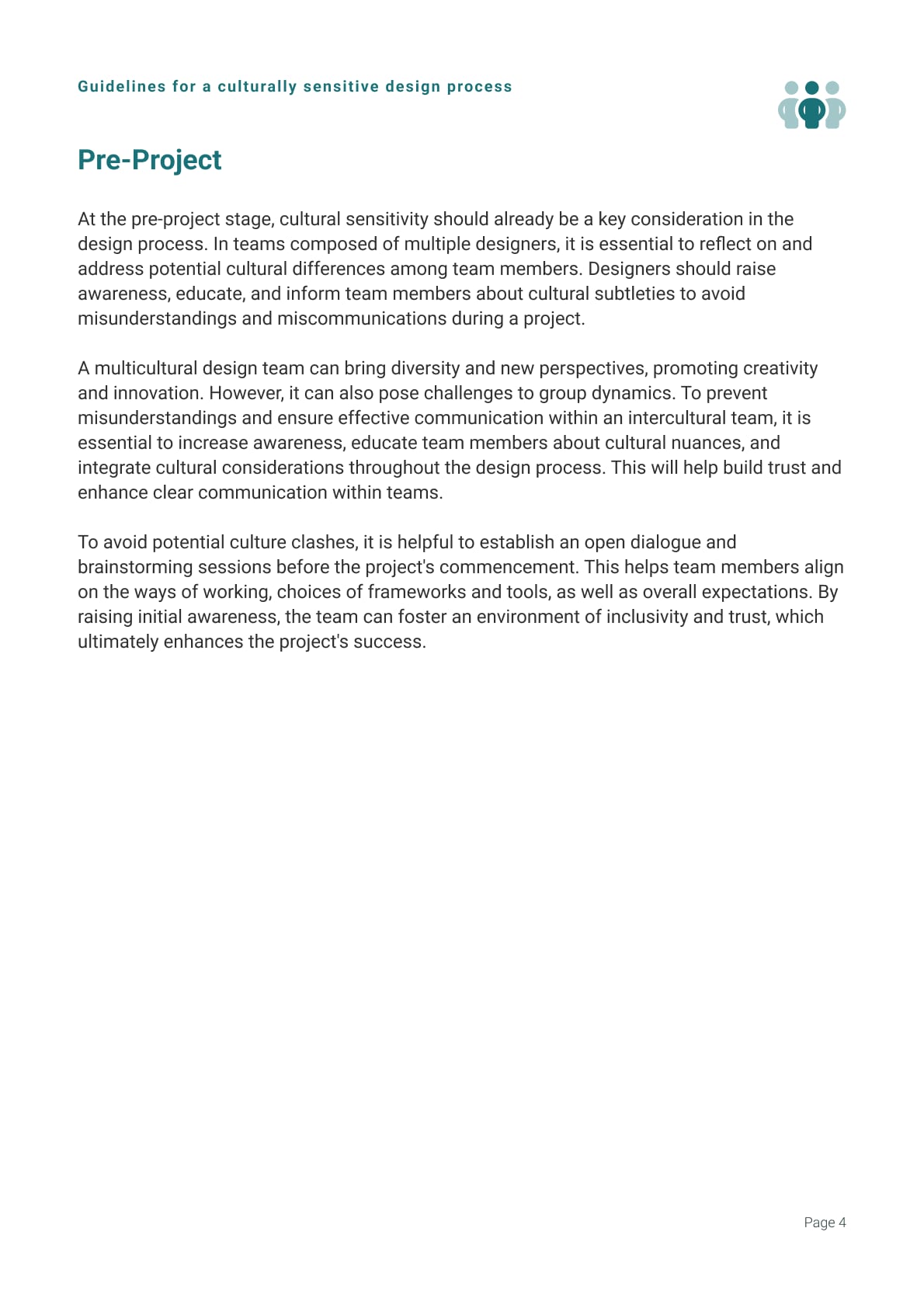
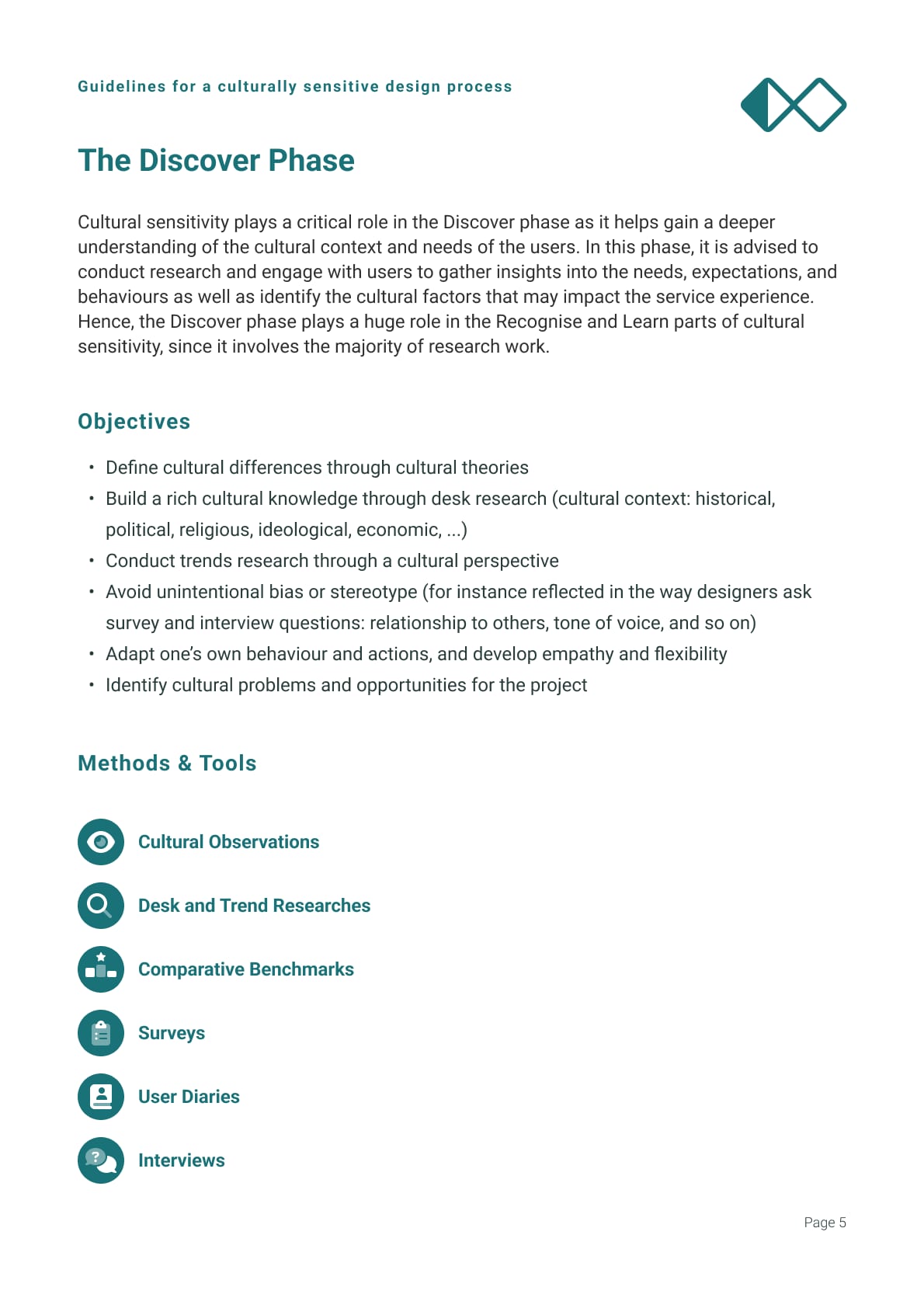
The toolkit. Cultural Sensitivity in the Service Design Process: Guidelines to Service Designers, written in May 2023. It adds a pre-project phase to the double diamond, for the cultural work inside the team before any user is met, and gives objectives and methods for each of Discover, Define, Develop and Deliver. Its frame is a Venn diagram of service, design and culture, and the guidelines sit where the three overlap.
The chapter. With Luca Simeone, the thesis research became The Role of Cultural Sensitivity in Fostering Empathy in Service Design, chapter 7 of Empathic Service Design: Challenges in Design, Analysis and Services, edited by Melanie Sarantou, Satu Miettinen and Titta Jylkäs, published by Bloomsbury in 2025. It argues that four moves of cultural sensitivity, recognition, learning, respect and adaptation, are what build empathy with the people a service is for, and inside the team that designs it.
What changed
The method is public. The toolkit is available on request; the chapter’s opening extract is free to read on Bloomsbury’s site, and the full text is in the book. Read more on the Publications page →
What’s next
The toolkit was written from one case in two cities. The next step is to use it on a project with a team that is itself multicultural, and to revise the pre-project phase from what that team finds hard.
Takeaways
- Culture is not a phase of the process. It belongs in every one, from the first brief to delivery, which is the whole argument of the toolkit.
- No designer has absolute cultural knowledge. Cultural sensitivity is an ongoing commitment, not a box to tick, and the method has to make room for the designer’s own biases.
- Service designers are facilitators and translators, of ideas and of culture. Their skills are human and social before they are technical.